

Root canal treatment aims to preserve a tooth suffering from infection or damage, often impacting the pulp: the central part filled with nerves, blood vessels, and connective tissue.

What Does Root Canal Treatment Do?
When bacteria or trauma damage the pulp tissue, it can lead to pain, infection, and tooth loss if untreated. Root canal treatment removes the infected or damaged pulp, cleans and disinfects the inside of the tooth, and seals it to prevent future infection.
The Role of Modern Endodontics in Root Canal Treatments
Modern Endodontics uses advanced technology, conservative methods, and biocompatible materials to achieve more reliable results for your patients. However, the long-term success of root canal treatment relies heavily on the appropriate tooth restoration after the treatment is completed.
Your referring dentist will receive a recommendation regarding this. You must continue to visit your dentist for general dental care.
Root Canal Treatment Process
Root canal treatment is a procedure that removes infection from inside a tooth, relieves pain and helps restore your natural tooth to normal function.
Treatment Process in Detail:
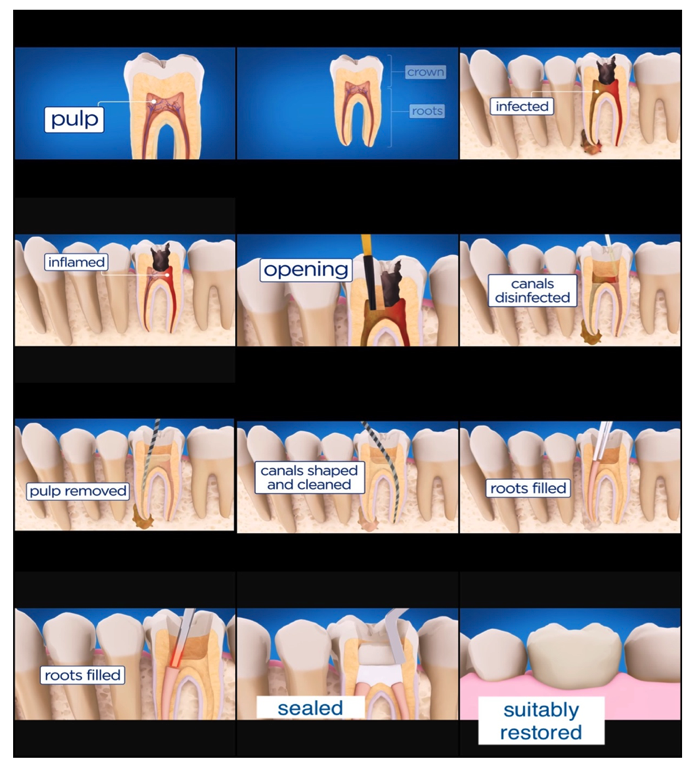
First, the tooth is carefully numbed to keep you comfortable throughout the procedure. A small protective sheet, called a rubber dam, is placed around the tooth to keep it clean, dry, and free of bacteria during treatment. A small opening is then made to gently remove the infected tissue from inside the tooth. The root canals are thoroughly cleaned, disinfected, and shaped to remove bacteria.
Once clean, the canals are sealed to prevent further infection.
After root treatment is complete, the tooth must be properly restored to protect it and help ensure the best long-term outcome.
Adam can provide the final restoration himself or work closely with your referring dentist to advise you on the most appropriate option. The diagram below outlines the typical steps involved in the procedure.
Post-Treatment Care & Recovery
After root canal treatment, following these simple aftercare steps can support your healing and help ensure a successful outcome.
What You Might Feel
It’s completely normal to experience mild discomfort or sensitivity for a few days after your treatment. This is a sign your body is healing. Pain relief, such as ibuprofen or paracetamol, is usually enough to manage any symptoms.
How to Care for Your Teeth
Eat Soft Foods
Avoid chewing on the treated side until your permanent crown or filling is in place. Stick to soft, non-sticky food for a few a days.
Manage Pain Gently
Use over-the-counter painkillers as directed. If we've prescribed medication, be sure to take it exactly as instructed.
Keep Your Mouth Clean
Brush and floss gently around the area. Keeping your mouth clean helps prevent infection and promotes healing.
Follow-Up is Essential
A follow-up visit is often needed with your own dentist to place a definitive restoration, such as a crown or onlay. This provides a good seal on the root treatment and reduces the risk of the tooth breaking after the root canal treatment. Failure to do this may result in the root canal treatment failing early. In addition, Adam will arrange a 1-year review to assess healing.
When to Get in Touch
Give us a call if you notice any of the following:
- Persistent or severe pain that doesn’t improve;
- Swelling in the face or around the treated tooth;
- A loose or missing temporary filling or crown;
- Signs of infection, like a fever or a bad taste in your mouth.
With the option for self-referrals and referrals by your dentist, Modern Endodontics by Dr Adam Watt makes it easy for root canal patients based in Glasgow and further afield to access advanced endodontic care.

If you're a patient looking to self-refer for an endodontic treatment with Dr Adam Watt, please contact the Treatment Coordinator at Broomhill Dental, Glasgow.